
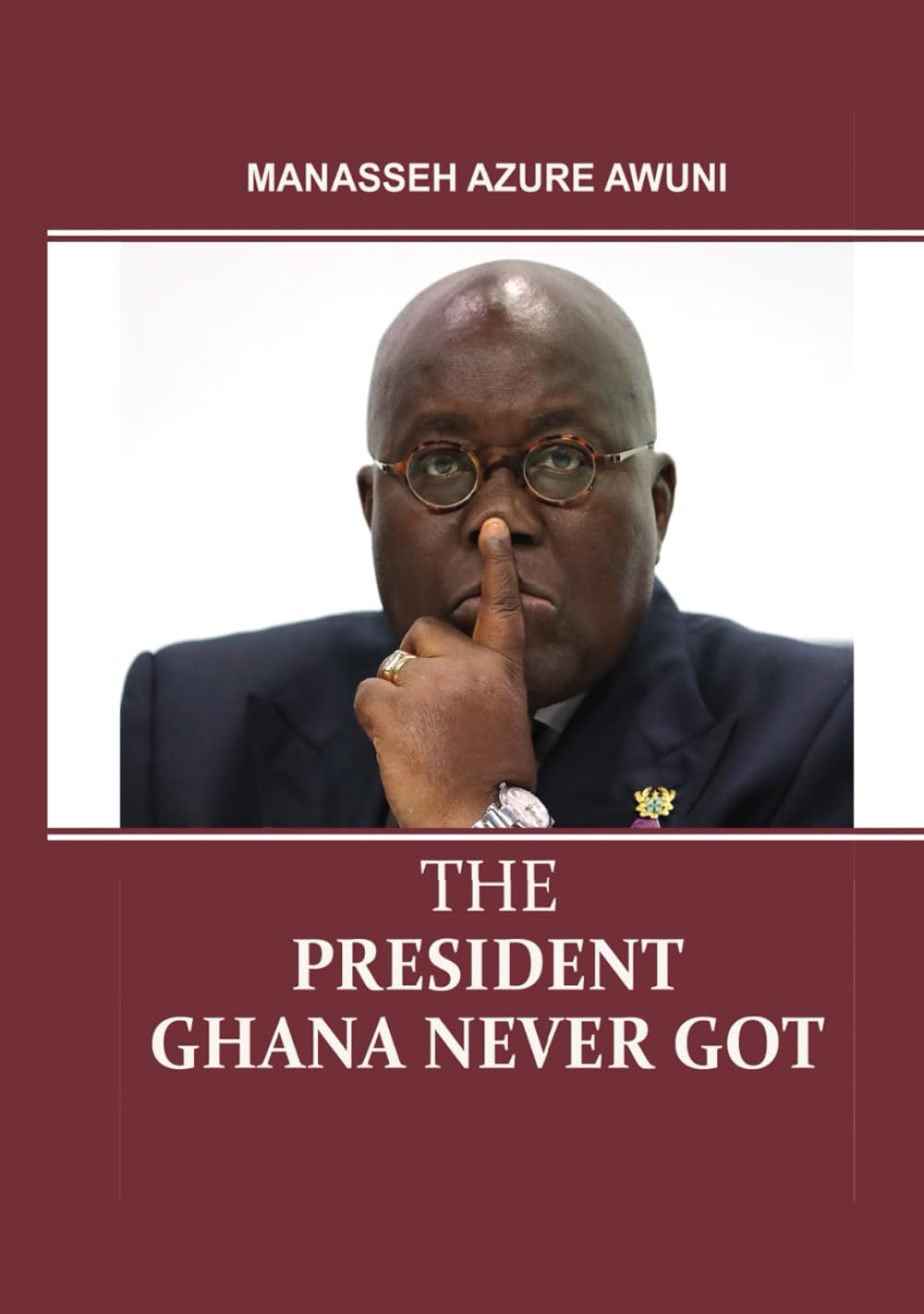
Introduction
“The President Ghana Never Got” is a compelling narrative by Manasseh Azure Awuni that examines the political journey and presidency of Nana Akufo-Addo. The book is structured into seven parts, each dissecting different aspects of Akufo-Addo’s political life and governance.
Awuni’s investigative prowess shines through as he uncovers the discrepancies between the promises made during Akufo-Addo’s campaign and the reality of his presidency.
Key Highlights

Political Journey and Mentorship: The book begins with a detailed account of Akufo-Addo’s political journey, highlighting the influence of his grand uncle and political mentor, JB Danquah. Awuni traces the lineage and political ideologies that shaped Akufo-Addo’s aspirations and eventual rise to the presidency.
The Unfulfilled Promises: Awuni critically examines the promises made by Akufo-Addo during his 2016 campaign, contrasting them with the outcomes of his presidency. He notes that Ghanaians were “sold or marketed an alternative” that ultimately did not deliver on its promises, leading to widespread disappointment[1].
Controversial Decisions and Scandals: A significant portion of the book is dedicated to controversial decisions and scandals during Akufo-Addo’s tenure. One notable example is the fumigation contracts during the COVID-19 pandemic, which Awuni describes as unnecessary and financially dubious. He points out that these expenditures were not captured in the Auditor General’s report, raising questions about transparency and accountability[1].
Supreme Court Appointment Controversy: Awuni also reveals the contentious appointment of a Supreme Court judge, which was intended to appease a previously disappointed judge. This incident underscores the political maneuvering and questionable practices within the Akufo-Addo administration.
Conclusion
“The President Ghana Never Got” is a thought-provoking examination of the complexities and challenges of political leadership in Ghana.
Manasseh Azure Awuni’s book not only critiques the Akufo-Addo presidency but also serves as a broader commentary on the state of Ghanaian politics.
Through meticulous research and compelling storytelling, Awuni provides readers with a deeper understanding of the political landscape and the leaders who shape it.
References:
- https://www.youtube.com/watch?v=aWa0t_V8PTw
- https://www.amazon.com/President-Ghana-Never-Got/dp/B0DCFZYNSN
- https://www.amazon.co.uk/dp/B0DCFZYNSN?psc=1&smid=A3P5ROKL5A1OLE
- https://booknook.store/product/the-president-ghana-never-got/
- https://twitter.com/Manasseh_Azure/status/1821778001584914470


 Inspiring Net